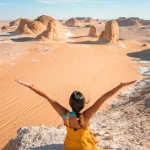

Egypt is often associated with the pyramids of Giza, ancient temples, busy cities, and the famous beaches of the Red Sea. Yet far from the busiest tourist resorts lies a remarkable protected area where mountains, desert, coastline, mangroves, coral reefs, and traditional communities exist side by side.
This is Wadi El Gemal National Park.
Located in Egypt’s Eastern Desert, south of Marsa Alam, Wadi El Gemal is one of the most fascinating natural areas along the Red Sea coast. The park covers a vast landscape that extends from rugged desert mountains toward the sea. Along the way, visitors encounter valleys, rocky plateaus, sandy plains, mangrove habitats, coral reefs, islands, archaeological remains, and wildlife adapted to an exceptionally dry environment.
Wadi El Gemal is much more than a destination for a desert excursion or a day at the beach. It is a place where natural and cultural heritage are closely connected.
For travelers who want to discover a quieter and more authentic side of Egypt, the national park offers an opportunity to experience the country beyond its famous monuments. A well-planned Egypt itinerary with Best Tours Hurghada can also include nature-focused experiences that complement traditional sightseeing with the landscapes of the Red Sea and Eastern Desert.
Where Is Wadi El Gemal National Park?
Wadi El Gemal National Park is located on Egypt’s Red Sea coast, south of Marsa Alam and roughly between the coastal resort areas and the deep Eastern Desert.
The protected area includes both terrestrial and marine environments.
This is one of its greatest strengths.
A single region contains:
- Desert mountains
- Rocky valleys
- Gravel plains
- Coastal dunes
- Beaches
- Mangrove forests
- Coral reefs
- Seagrass meadows
- Offshore islands
- Marine habitats
- Archaeological sites
The transition from mountains to sea is particularly impressive.
In many parts of Egypt, desert and coastline appear as separate environments. In Wadi El Gemal, they form one connected ecological landscape.
What Does the Name Wadi El Gemal Mean?
The name Wadi El Gemal is commonly translated as “Valley of the Camels.”
The name reflects the importance of camels and traditional movement through the desert.
For centuries, camels have been essential to communities living in the Eastern Desert. They can travel long distances through dry environments while carrying supplies and people.
The name therefore reflects more than geography.
It also hints at the relationship between people, animals, and the desert environment.
A Landscape of Mountains and Desert
One of the first things visitors notice in Wadi El Gemal is the dramatic landscape.
The Eastern Desert is not simply an endless sea of sand.
Much of the region consists of mountains, hills, rocky valleys, and gravel plains.
These formations are the result of geological processes that have shaped the landscape over immense periods of time.
The mountains can appear barren at first glance.
However, the desert contains numerous forms of life.
Plants grow in valleys where occasional rainfall collects. Animals use rocky areas as shelter. Birds move between the desert and coastal environments.
The landscape is therefore much more dynamic than it may initially appear.
The Wadi System
A “wadi” is a valley or channel in an arid environment that may carry water during periods of rainfall.
In Wadi El Gemal, these valleys are important ecological features.
Rain is limited, but when storms occur, water can temporarily flow through the valleys.
This water can support vegetation and replenish local groundwater resources.
Plants growing in wadis may therefore be much more abundant than those found on exposed rocky slopes.
The wadis also provide natural routes through the mountains.
Historically, people understood these landscapes and used them to move through the desert.
From Desert Mountains to the Red Sea
One of the defining characteristics of Wadi El Gemal is the direct connection between its inland and coastal ecosystems.
A journey through the park can begin among dry mountains and eventually reach the Red Sea.
The scenery changes gradually.
Rocky desert gives way to coastal plains.
Dry valleys approach sandy beaches.
Mangroves grow in sheltered coastal areas.
Beyond the shoreline, coral reefs and seagrass meadows support marine life.
This ecological continuity makes the area particularly valuable for conservation.
The Red Sea Coast
The coastline of Wadi El Gemal is one of the park’s greatest attractions.
The Red Sea is famous around the world for its clear water, colorful coral reefs, and marine biodiversity.
Within the protected area, the coastline remains comparatively undeveloped in many locations.
This creates a different experience from heavily developed resort areas.
Visitors can find quiet beaches, rocky shorelines, shallow lagoons, and coastal habitats where nature remains the dominant feature.
Coral Reefs and Marine Ecosystems
The marine environment of Wadi El Gemal is exceptionally important.
The Red Sea contains extensive coral reef ecosystems that provide shelter and food for numerous marine organisms.
Coral reefs are sometimes described as underwater cities because of the incredible number of species that can live around them.
In the waters of the national park, visitors may encounter:
- Reef fish
- Sea turtles
- Rays
- Moray eels
- Octopuses
- Crustaceans
- Mollusks
- Various reef organisms
The exact species encountered depend on location, season, weather, and underwater conditions.
Why Are Red Sea Coral Reefs Important?
Coral reefs provide much more than beautiful scenery for divers and snorkelers.
They protect coastlines from waves.
They provide habitat for marine species.
They support food webs.
They contribute to local economies through fishing and tourism.
They are also scientifically important because Red Sea corals have demonstrated remarkable tolerance to high temperatures compared with many other coral ecosystems.
Protecting these reefs is therefore important not only for Egypt but also for global marine conservation.
Mangroves of Wadi El Gemal
Mangroves are among the most fascinating ecosystems found along the Red Sea coast.
They are trees and shrubs capable of living in salty or brackish coastal environments.
That ability makes them particularly important in desert regions where freshwater is scarce.
Mangroves provide shelter for young marine organisms and birds.
They also help stabilize coastal sediments.
Their root systems reduce erosion and create complex habitats where fish and invertebrates can live.
In Wadi El Gemal, mangroves are therefore an important connection between land and sea.
Seagrass Meadows and Sea Turtles
The shallow waters of the Red Sea can contain extensive seagrass habitats.
These underwater meadows are particularly important for marine herbivores.
One of the most famous animals associated with Red Sea seagrass is the green sea turtle.
Green turtles feed on seagrass and may use coastal areas for resting and feeding.
Seeing a sea turtle in its natural habitat can be one of the most memorable experiences for visitors.
However, wildlife should always be observed from a respectful distance.
Touching turtles, chasing them, or attempting to feed them can cause stress and interfere with natural behavior.
Abu Ghusun and Coastal Habitats
The wider Wadi El Gemal region includes a variety of coastal environments.
Some areas contain beaches and shallow bays, while others are characterized by rocky coastlines.
The diversity of habitats creates opportunities for different species.
It also gives visitors a chance to see how quickly the landscape can change.
One moment the environment appears completely desert-like.
A short distance later, green mangroves and blue water transform the scene.
Islands of the National Park
The protected marine area includes offshore islands that form important habitats for birds and marine organisms.
Some islands are surrounded by coral reefs and shallow waters.
Their isolation can provide relatively undisturbed spaces for wildlife.
The islands also contribute to the ecological complexity of the region.
For conservationists, protecting these offshore habitats is just as important as protecting the mainland desert.
Wildlife of Wadi El Gemal
Although the desert may look empty, Wadi El Gemal supports a surprising variety of wildlife.
Animals living in the region have evolved to cope with heat, limited water, and scarce vegetation.
Possible wildlife includes:
- Dorcas gazelles
- Nubian ibex
- Hyraxes
- Foxes
- Small desert mammals
- Reptiles
- Migratory and resident birds
Marine species add another layer of biodiversity.
Sea turtles, dolphins, rays, reef fish, and many invertebrates inhabit the coastal environment.
Desert Adaptations
Life in the Eastern Desert requires extraordinary adaptations.
Many animals avoid the hottest part of the day.
Some are most active during the early morning, evening, or night.
Others obtain much of their moisture from food.
Plants may have deep roots, reduced leaves, or other adaptations that help them survive prolonged dry periods.
The desert ecosystem is therefore based on efficiency.
Every drop of water matters.
Birds of Wadi El Gemal
The combination of desert and coastal habitats makes the national park interesting for birdwatchers.
Coastal areas provide feeding and resting places for birds.
Migratory species may pass through the Red Sea region during seasonal movements between Africa, Europe, and Asia.
Desert areas support species adapted to rocky terrain and dry conditions.
Birdwatching is particularly rewarding when visitors move slowly and avoid unnecessary disturbance.
Archaeological Heritage
Wadi El Gemal is important not only because of its natural environment.
The area also contains significant archaeological remains.
The Eastern Desert was crossed by ancient routes connecting the Nile Valley with the Red Sea coast.
One of the most famous resources associated with the region is emerald.
Ancient emerald mining took place in the Eastern Desert, particularly around the area historically known as Mons Smaragdus.
These mines were among the most important known sources of emeralds in the ancient Mediterranean world.
Ancient Emerald Mining
Emeralds were highly valued in antiquity.
They were used for jewelry and objects associated with wealth and status.
Mining in such an environment was extremely difficult.
Workers had to operate in remote desert locations with limited water and harsh climatic conditions.
Archaeological remains provide evidence of mining activity and associated settlements.
These sites demonstrate how valuable natural resources could connect remote desert landscapes to international trade networks.
Roman and Ptolemaic Connections
The Eastern Desert was important during the Ptolemaic and Roman periods.
Routes crossed the mountains toward ports on the Red Sea.
These routes allowed goods and people to move between the Nile Valley and maritime trade networks.
Archaeological remains include settlements, mining areas, roads, wells, and other structures associated with desert travel.
The landscape therefore contains traces of economic activity that took place centuries ago.
Ancient Desert Roads
Travel through the Eastern Desert was never easy.
Ancient travelers needed to know where water could be found.
Routes had to connect reliable wells and resting places.
Guides with detailed knowledge of the terrain were essential.
This knowledge remained important for later communities as well.
Modern visitors may travel through the region in comfortable vehicles, but the archaeological remains remind us how challenging desert travel once was.
The Importance of Water in Ancient Travel
Water determined the location of settlements and routes.
A well could make the difference between a successful journey and a dangerous one.
Ancient travelers therefore developed sophisticated knowledge of desert geography.
Some wells and water systems became important stopping points.
The archaeological landscape of Wadi El Gemal cannot be understood without considering this relationship between humans and water.
Traditional Communities of Wadi El Gemal
The park is also home to local communities whose history is closely connected with the Eastern Desert.
The Ababda and Bishari peoples have longstanding cultural connections to the region.
Traditional knowledge of the desert remains an important part of local identity.
This knowledge includes understanding plants, animals, water sources, routes, weather, and seasonal changes.
Such knowledge is extremely valuable in an environment where survival depends on understanding nature.
Bedouin Knowledge of the Desert
Local desert communities have developed ways of living that reflect the environment.
Camels have traditionally played an important role in transportation.
Knowledge of desert plants can help identify useful food sources and medicinal species.
Knowledge of terrain allows people to travel between settlements and water sources.
For visitors, meeting local communities can add an important cultural dimension to a national park experience.
However, cultural encounters should always be respectful and based on consent.
Local Culture and Sustainable Tourism
Tourism can create economic opportunities for communities living near protected areas.
Local guides, drivers, accommodation providers, craftspeople, and food producers can all benefit from responsible tourism.
At the same time, tourism needs to be managed carefully.
Too many visitors in sensitive areas can damage habitats.
Uncontrolled vehicle movement can disturb wildlife.
Improper waste disposal can pollute the desert and sea.
Sustainable tourism therefore requires cooperation between authorities, communities, visitors, and tourism operators.
Why Wadi El Gemal Is Environmentally Important
Wadi El Gemal protects a remarkable range of ecosystems within one connected region.
The park’s importance comes partly from this diversity.
It protects:
- Desert mountains
- Wadis
- Coastal habitats
- Mangroves
- Seagrass meadows
- Coral reefs
- Islands
- Marine species
- Desert wildlife
Protecting such a wide range of habitats helps maintain ecological connections.
A healthy coastal environment depends partly on what happens inland.
Likewise, desert ecosystems and coastal communities are connected through water, climate, wildlife, and human activity.
The Connection Between Land and Sea
One of the most valuable lessons of Wadi El Gemal is that desert and sea should not be viewed as separate environments.
Rainfall in the mountains can influence valleys and groundwater.
Sediments can move toward the coast.
Mangroves connect terrestrial and marine systems.
Seagrass supports marine animals.
Coral reefs provide habitat for fish.
The entire system is interconnected.
This is one reason protected areas like Wadi El Gemal are so important.
Activities for Visitors
Wadi El Gemal offers a wide range of experiences.
Depending on regulations, local conditions, and the specific tour, visitors may enjoy:
- Snorkeling
- Diving
- Wildlife observation
- Desert excursions
- Hiking
- Photography
- Beach visits
- Birdwatching
- Cultural experiences
- Archaeological exploration
- Boat trips
- Stargazing
The variety makes the park suitable for different types of travelers.
Snorkeling in Wadi El Gemal
For many visitors, snorkeling is one of the easiest ways to experience the Red Sea.
Clear water and shallow reef areas can provide excellent opportunities to observe marine life.
However, coral reefs are fragile.
Visitors should avoid standing on coral, touching marine organisms, or collecting shells and other natural objects.
Using reef-safe practices helps protect the environment for future generations.
Diving in the National Park
Experienced divers can explore deeper sections of the Red Sea ecosystem.
Coral formations, reef fish, walls, and other underwater landscapes can create memorable dives.
Conditions vary depending on the location and weather.
Divers should always follow local regulations and the instructions of qualified dive professionals.
Desert Safaris
The inland part of Wadi El Gemal is ideal for travelers interested in desert landscapes.
A desert excursion can reveal how dramatically the landscape changes between different areas.
Visitors may travel through rocky valleys, mountain landscapes, and open plains.
Some tours also combine desert exploration with cultural experiences.
This combination can provide a more complete understanding of the region.
Photography in Wadi El Gemal
The national park offers exceptional photographic opportunities.
Photographers can capture dramatic contrasts between:
- Red Sea and desert,
- Green mangroves and dry mountains,
- Blue sky and golden sand,
- Coral reefs and rocky coastlines,
- Traditional communities and rugged landscapes.
Sunrise and sunset are especially atmospheric.
During these periods, the low-angle light emphasizes the texture of mountains and desert valleys.
A Destination for Responsible Travelers
Wadi El Gemal is best suited to visitors who appreciate nature and are willing to travel responsibly.
This is not simply a place to collect photographs.
It is a protected ecosystem.
Visitors should avoid leaving waste behind, damaging plants, disturbing animals, or taking natural objects from the park.
The goal should be to leave the landscape as close as possible to the way it was found.
Best Time to Visit Wadi El Gemal
The Red Sea coast can be visited throughout much of the year, but temperatures vary considerably.
The cooler months are generally more comfortable for desert exploration.
Winter can be particularly pleasant for hiking and desert excursions, although evenings may feel cool.
Spring and autumn can also provide good conditions.
Summer is much hotter, especially inland.
Travelers planning outdoor activities should therefore consider both air temperature and sea conditions.
What Should You Bring?
A trip to Wadi El Gemal requires practical preparation.
Useful items include:
- Reusable drinking water bottle
- Sunscreen
- Sunglasses
- Hat
- Comfortable walking shoes
- Lightweight clothing
- Swimwear
- Snorkeling equipment if not provided
- Camera
- Small personal first-aid kit
- Insect protection where appropriate
Visitors should also avoid excessive single-use plastic whenever possible.
Respecting Protected Areas
National parks exist to protect natural and cultural heritage.
That means certain activities may be restricted.
Visitors should follow instructions from park authorities and guides.
Do not remove stones, plants, shells, coral, archaeological objects, or other natural materials.
Do not feed wild animals.
Do not enter restricted archaeological areas.
Do not leave graffiti.
These simple rules help protect Wadi El Gemal for future generations.
Wadi El Gemal Compared with Hurghada
Hurghada is one of Egypt’s most popular Red Sea destinations.
It offers hotels, restaurants, beaches, boat trips, snorkeling excursions, diving centers, and many forms of entertainment.
Wadi El Gemal provides something different.
It offers a stronger sense of wilderness.
The landscape is less urbanized.
The connection between desert and sea is particularly visible.
For travelers staying in Hurghada, a longer excursion south can therefore provide a completely different perspective on the Red Sea region.
When planning such experiences, Best Tours Hurghada can be part of an itinerary focused not only on classic excursions but also on discovering Egypt’s natural landscapes.
Wadi El Gemal for Families
Families interested in nature can enjoy the variety of environments.
Children may find the combination of desert, sea, wildlife, and archaeological remains particularly engaging.
However, families should consider the length of travel and the age of their children.
Long desert journeys may not be comfortable for very young travelers.
Sun protection and hydration are especially important.
Wadi El Gemal for Adventure Travelers
Adventure travelers may find the park especially appealing.
There are opportunities to combine desert exploration with marine activities.
A single trip can include mountain landscapes in the morning and snorkeling in the Red Sea later in the day.
This combination is difficult to reproduce in many other destinations.
Wadi El Gemal for History Lovers
Travelers interested in history should not overlook the archaeological side of the park.
Ancient mining areas and desert routes demonstrate the importance of the Eastern Desert in ancient economies.
The emerald mines are particularly fascinating because they connect a remote landscape with the wider Mediterranean world.
The ruins become even more meaningful when visitors understand the difficult conditions under which ancient workers operated.
Wadi El Gemal for Nature Lovers
Nature lovers will appreciate the ecological variety.
Few places in Egypt combine desert mountains, mangroves, coral reefs, seagrass, islands, and marine wildlife within one protected landscape.
The park is therefore an excellent destination for anyone who wants to understand the biodiversity of the Red Sea region.
Wadi El Gemal and the Future of Conservation
The future of Wadi El Gemal depends on maintaining a balance.
The region has enormous tourism potential.
But its natural and cultural resources are not unlimited.
Coral reefs are vulnerable.
Mangroves need protection.
Wildlife requires undisturbed habitats.
Archaeological sites can be damaged by careless visitors.
Local communities need opportunities to benefit from tourism without losing their cultural identity.
Sustainable management is therefore essential.
Why Wadi El Gemal Matters
Wadi El Gemal demonstrates that conservation is not only about protecting individual species.
It is about protecting relationships between ecosystems and people.
The desert supports communities.
The mountains influence water movement.
The coast provides marine habitats.
Mangroves protect shorelines.
Seagrass supports turtles.
Coral reefs sustain marine biodiversity.
Ancient routes connect the landscape to human history.
Together, these elements create a complex cultural and environmental system.
An Alternative Face of Egypt
For many international visitors, Egypt begins with the pyramids.
Then perhaps come Luxor, the Nile, Cairo and the Red Sea resorts.
Wadi El Gemal adds another chapter.
Here, Egypt is not primarily about monumental architecture.
It is about open space.
It is about mountains and sea.
It is about coral reefs and mangroves.
It is about desert wildlife and ancient mining.
It is about communities whose knowledge of the landscape has been passed from one generation to another.
This makes the national park an excellent destination for travelers who want to go beyond the classic tourist route.
Conclusion – Where the Desert Meets the Sea
Wadi El Gemal National Park is one of Egypt’s most remarkable examples of the connection between natural and cultural heritage.
Its mountains and wadis reveal the geological character of the Eastern Desert. Its coastline opens onto the extraordinary marine environment of the Red Sea. Mangroves and seagrass provide essential habitats, while coral reefs support an impressive variety of marine life.
At the same time, ancient emerald mines, desert roads, archaeological remains, and traditional communities demonstrate that this landscape has been important to people for thousands of years.
The park is therefore more than a beautiful destination.
It is a living ecosystem and a historical landscape.
For travelers, the experience can be equally diverse. One day can combine desert mountains, archaeological sites, traditional culture, mangroves, coral reefs, and the clear waters of the Red Sea.
That combination is what makes Wadi El Gemal so special.
If you are planning an Egypt holiday from the Red Sea coast, consider adding destinations beyond the usual resort activities. With thoughtful planning through Best Tours Hurghada, travelers can discover a side of Egypt where nature, history, culture, and adventure come together.
Wadi El Gemal ultimately reminds us that Egypt’s greatest treasures are not limited to the monuments built by ancient civilizations.
Some of its most extraordinary treasures are landscapes that have existed for millions of years, ecosystems that continue to support life, and communities that have learned to live in harmony with one of the world’s most challenging environments.
Where the desert meets the Red Sea, Wadi El Gemal tells a story that is both ancient and alive.